

How To Draw Wolf Legs And Arms
This post has been originally commissioned for SketchBook Blog in 2022. After the site's migration, the original is no longer available, but yous tin can however access the content here. Enjoy!
Wolves are beautiful, noble animals, wild and mysterious. And so similar to our domestic dogs, still unique. And even though we all can recognize a wolf when nosotros see one, drawing them from imagination is a different thing. In this tutorial I will give you all the data y'all need to draw realistic wolves from memory—from full general beefcake, construction of the head and paws, to management and colors of fur.
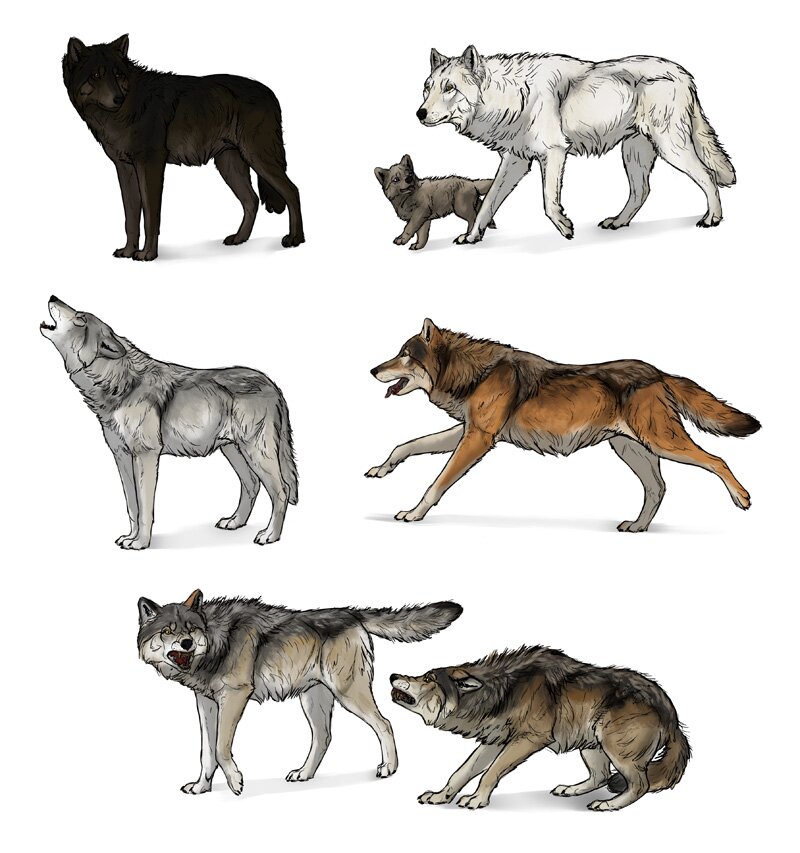
General Wolf Anatomy
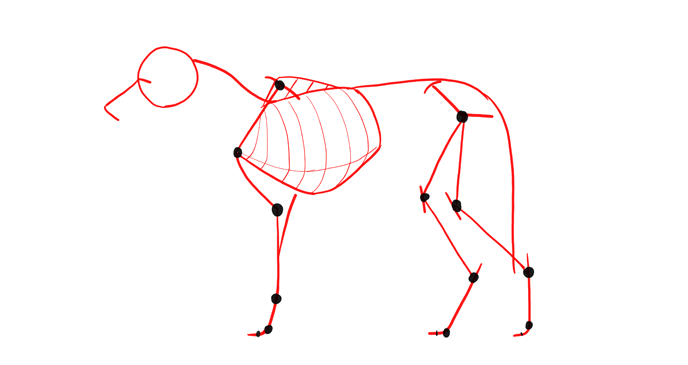
Permit's take a look at a simplified skeleton of the wolf first. It defines proportions of the parts of the body, so if you tin draw it (even in a sketchy manner), then y'all should be able to capture a wolf silhouette correctly every fourth dimension. The most important characteristic here are the long legs, with long "hands" and relatively brusque "feet."
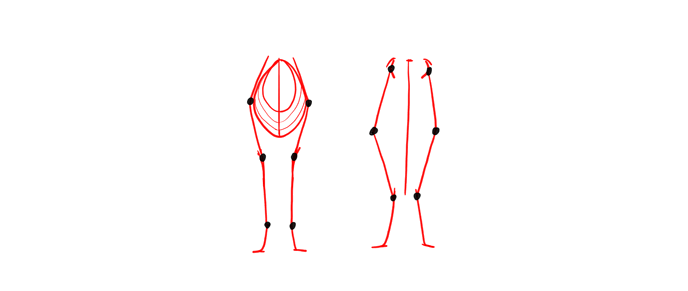
Wolves also accept a very narrow chest, so they keep their forelegs shut, with the paws often splayed outward. The hind legs have a special position also—they're usually more or less "moo-cow-hocked," which means the paws are turned slightly outside as well.
How to Draw a Wolf Pace By Footstep
Wolves take a very feature silhouette that can be drawn in a simplified style, without paying too much attention to the beefcake. Starting time with a long, rounded rectangle for the body…
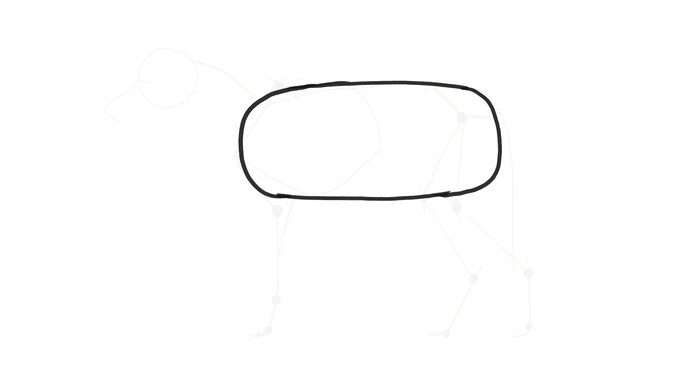
… then elongate its front to create a thick, fluffy neck. Don't describe its tip besides loftier over the trunk!
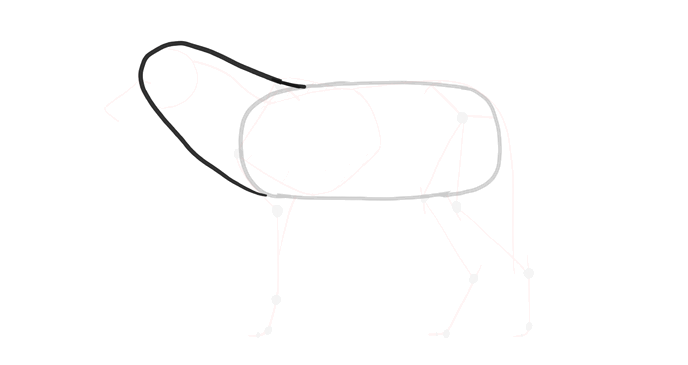
Add together the legs. Their length is very important.
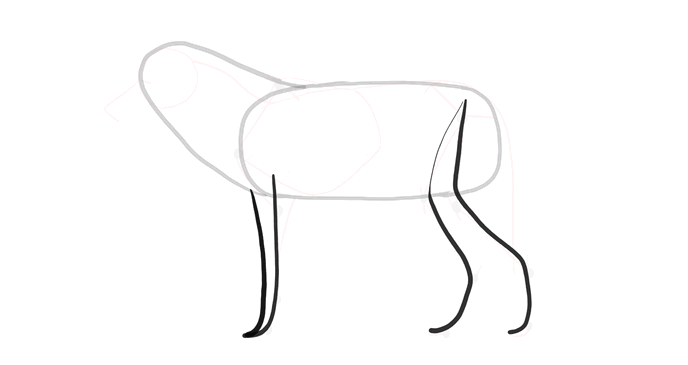
Add together the long muzzle and the cheek.
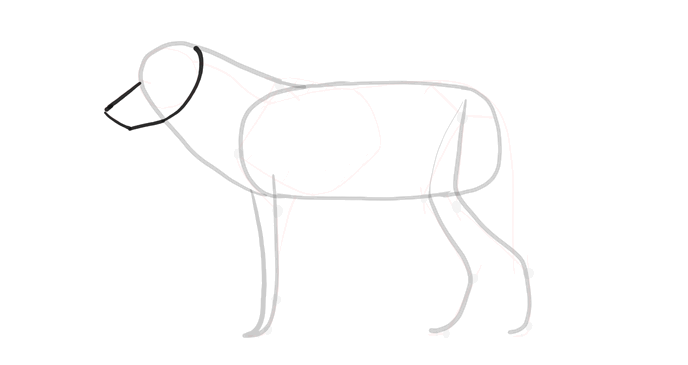
Add together the ears and the tail. The tail should reach the heels, and it's usually kept direct, with only very subtle curl immune.
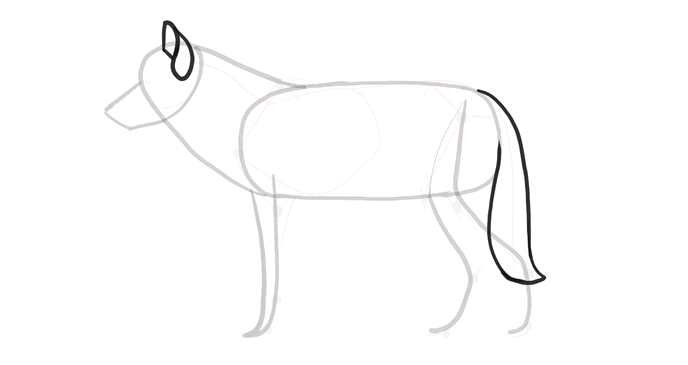
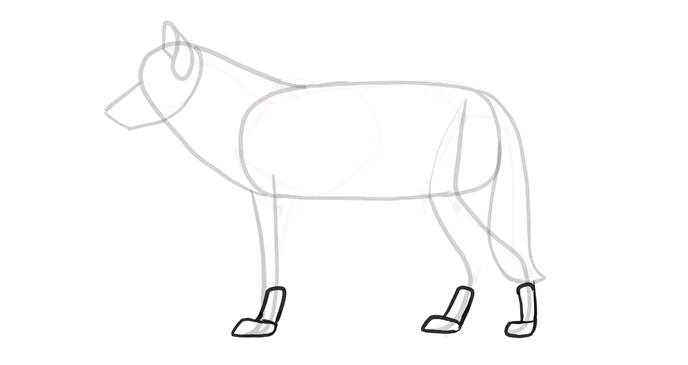
Add together the paws and the details of the legs.
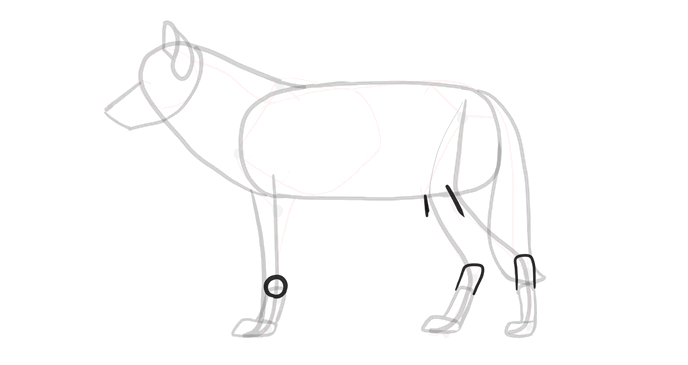
Draw a bean-like shoulder and half-circle-like thigh.
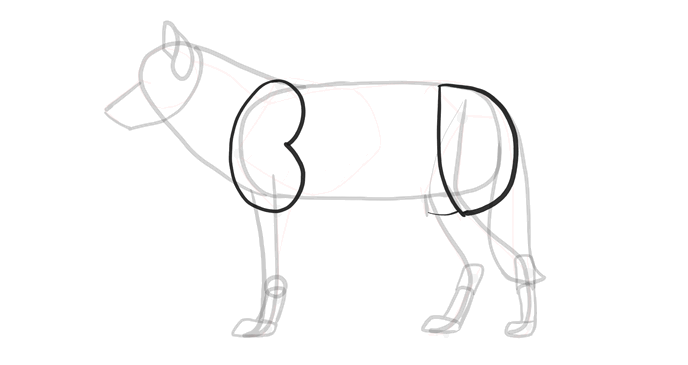
Add some body to the legs, connecting gently the paws to the shoulder and thigh.
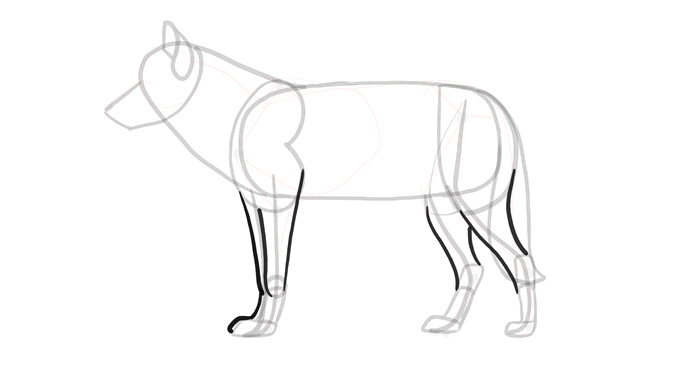
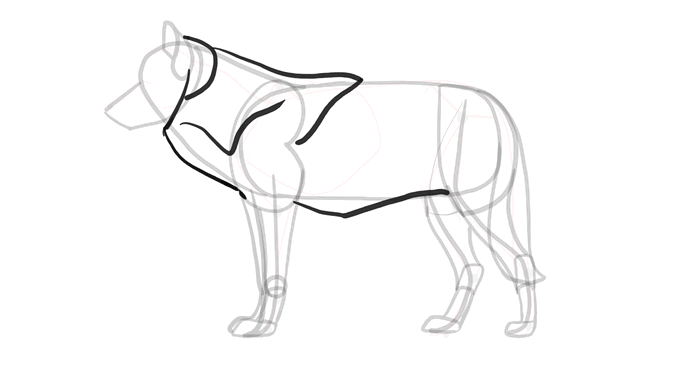
Finally, finish the silhouette by adding a mane and a shoulder cape.
How to Draw Wolf Paws
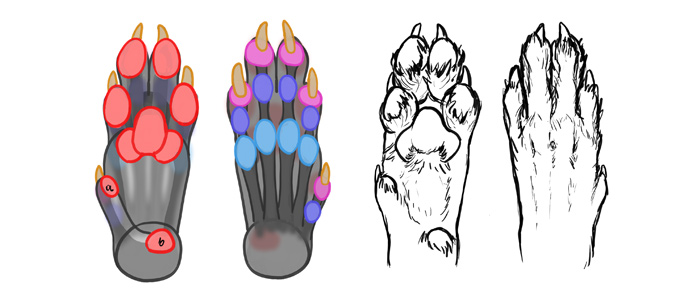
Wolf paws wait quite long, with the centre fingers/toes being so much longer than the one on the outside. The claws are non-retractable, and then they wear out and therefore shouldn't look too abrupt. Merely like in felines, front end paws have a dew claw ("pollex", a), and a pisiform pad (a protruding bone on the other side of your wrist, b). Hind paws accept only 4 toes and no dew claws.
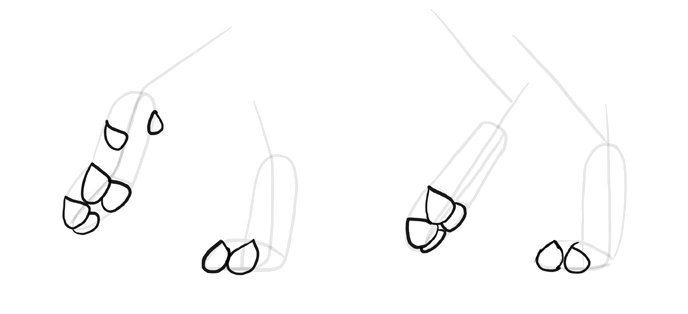
To draw the paws, beginning with general lines describing their position. These lines should be based on the skeleton.
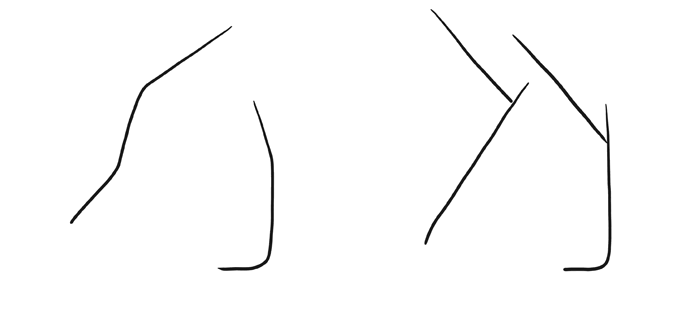
Depict ii sections for each mitt: the padded part and the bony role. Wolves are digitrade, which means they walk on their fingers and toes, and so that's how you can imagine it to create a right pose. The forepaws are often larger than the hind ones. Remember about keeping the right perspective.
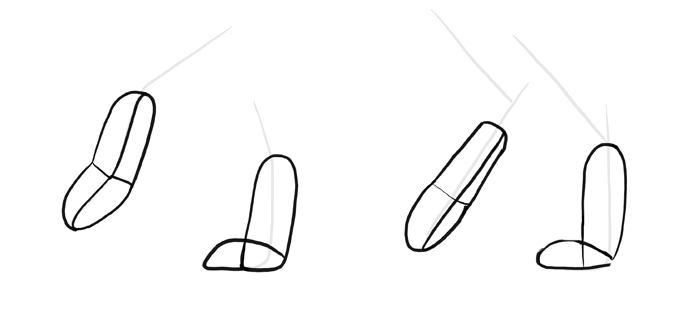
Draw the fingers and toes, imagining they're piffling sacks filled with something heavy.
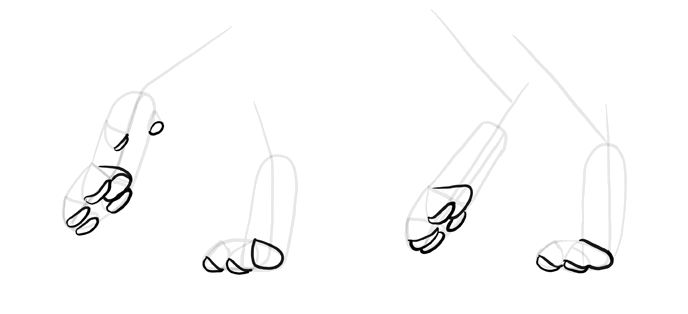
Reveal the bottom of each paw, and add a bigger "sack" on the back.
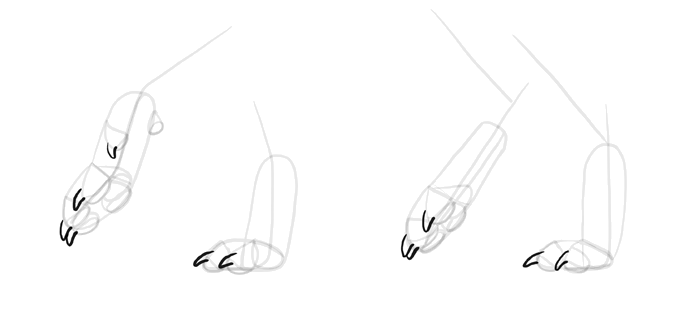
Add a slightly curved claw to each finger and toe. Remember to go on them blunt!
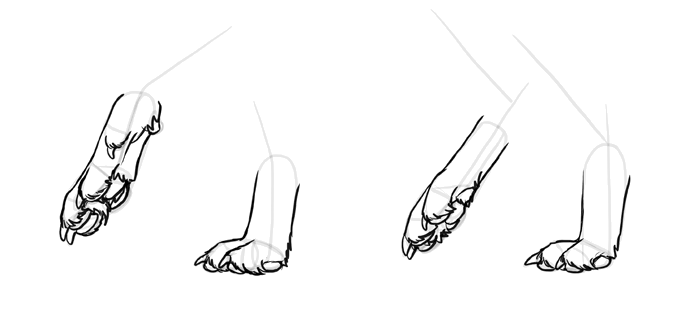
Cease the paws by roofing the pads with fur. Wolf paws are often drawn as very skinny, with an exaggerated anatomy, to brand them visibly different from feline paws. However, it's non necessary—"flat" elongated paws with very long fingers in the center are enough for a wolf wait.
How to Draw a Wolf Caput: Front, Profile & in Perspective
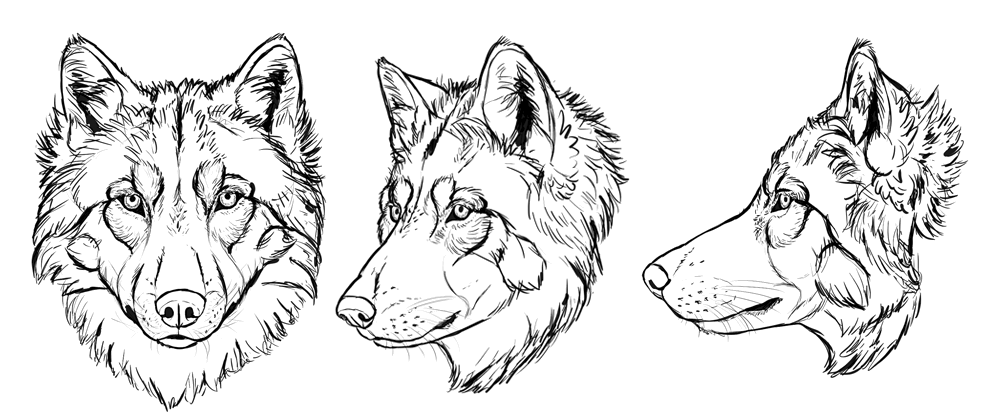
We all know that wolves have long muzzles and pointed ears, but if you want to draw a realistic wolf caput, you need to know more than than that. There's a lot of steps in this procedure, but you but demand to follow me directly once—later y'all should be able to find your ain personal "shortcuts."
Let's start with a line showing the direction of the muzzle and a line showing the position of the eyes.
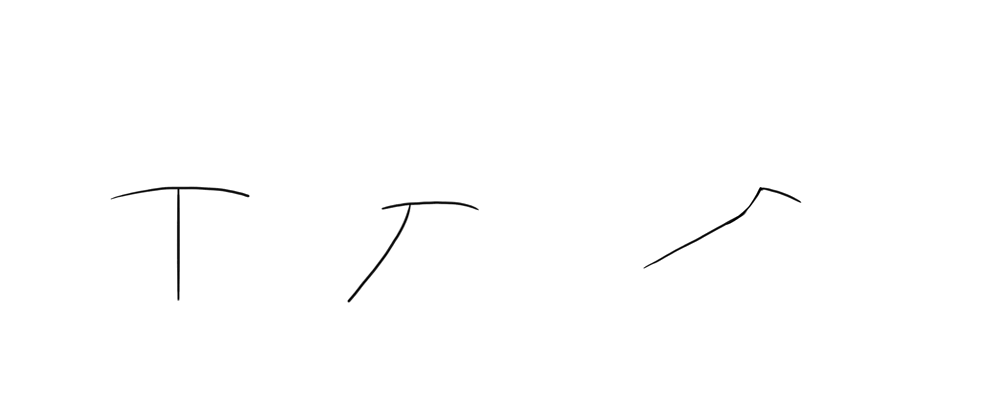
Add the tip of the muzzle. Call up to use perspective hither.
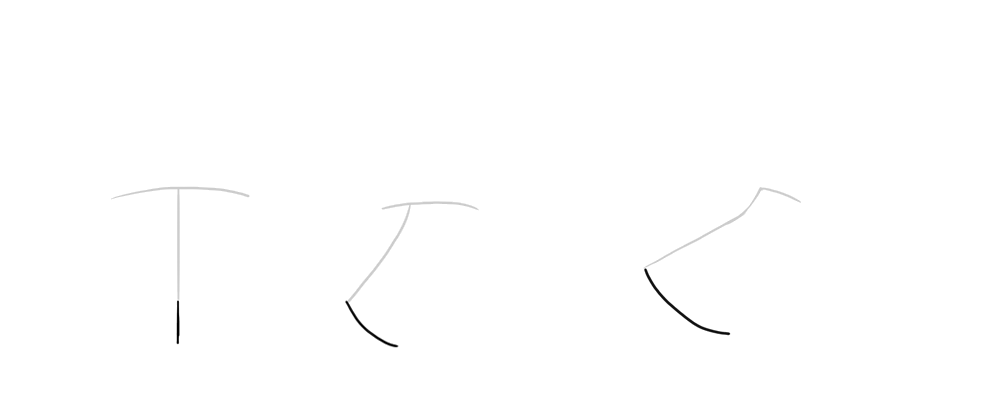
Close the shape of the muzzle with a round line.
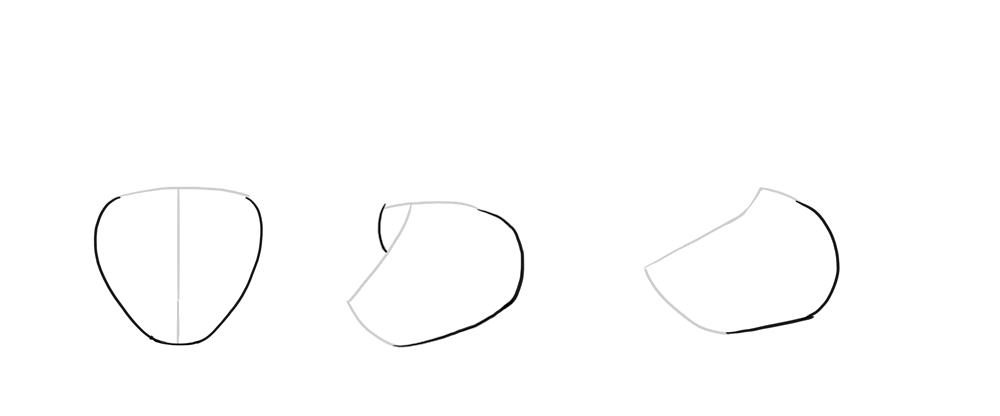
Add the balance of the skull. Imagine a big, flattened sphere attached to the muzzle.
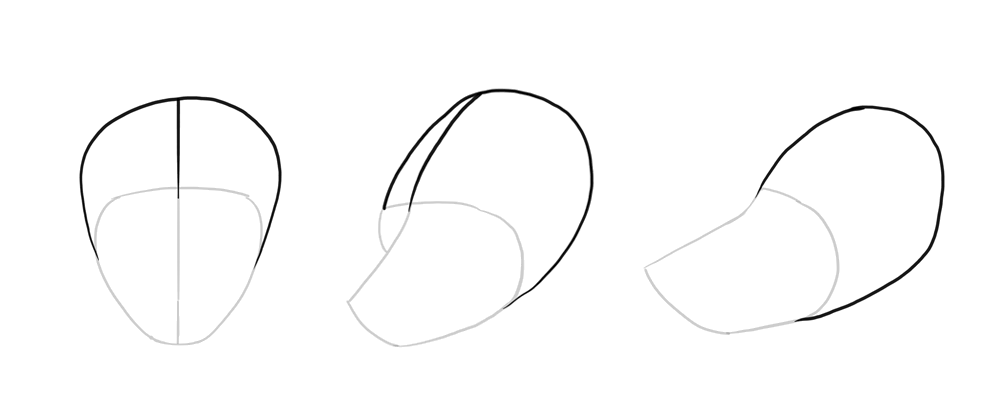
Draw the actual muzzle, using a form of a sack. It should be longer and narrower than in cats.
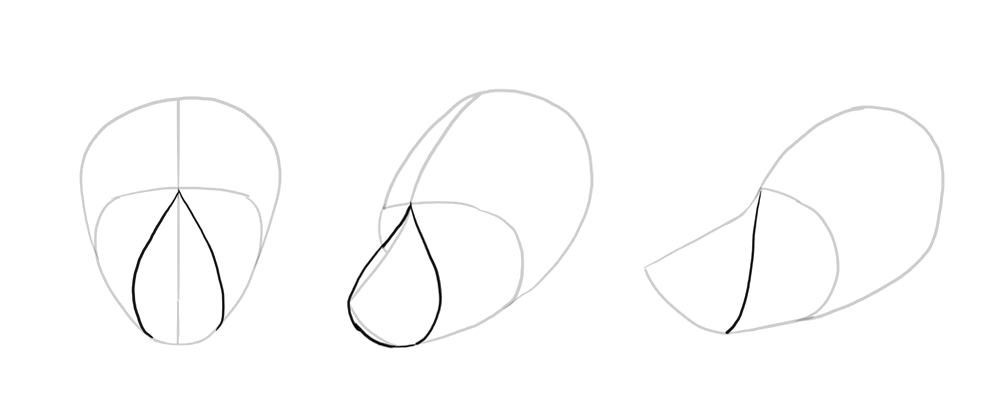
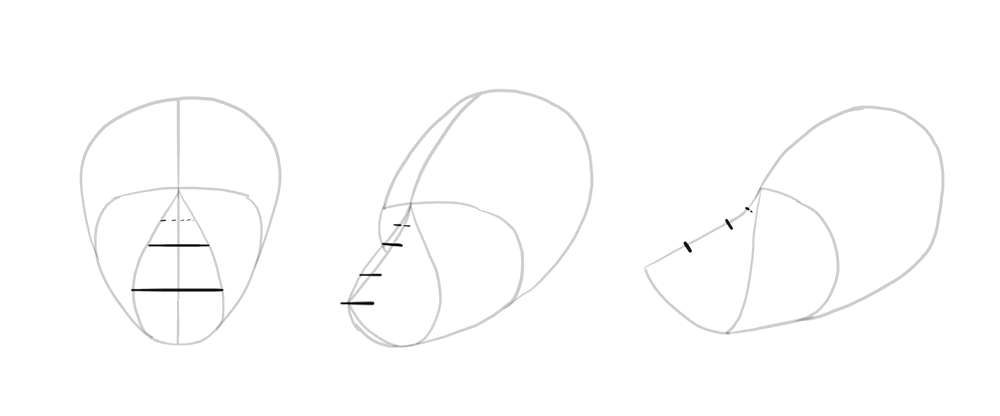
Divide the muzzle into thirds, then divide the upper tertiary into halves. Y'all don't need to measure them perfectly—just remember that this line on the acme should exist quite far from the tip of the muzzle.
Add huge panda-similar patches where the eyes volition be. Subtly connect them with the muzzle.
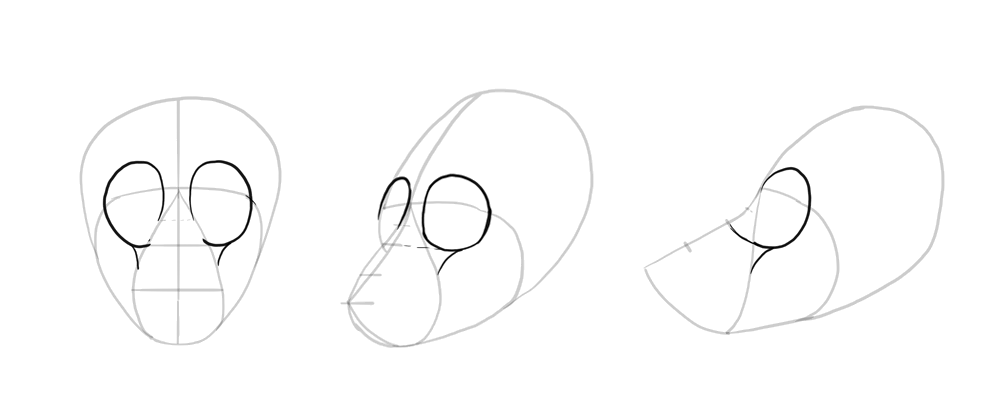
Create holes for the eyes with this simple curved line.
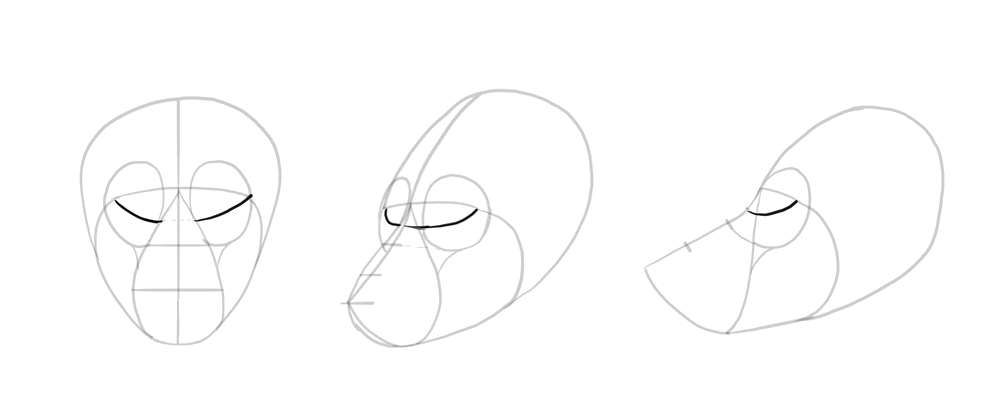
Add the brow.
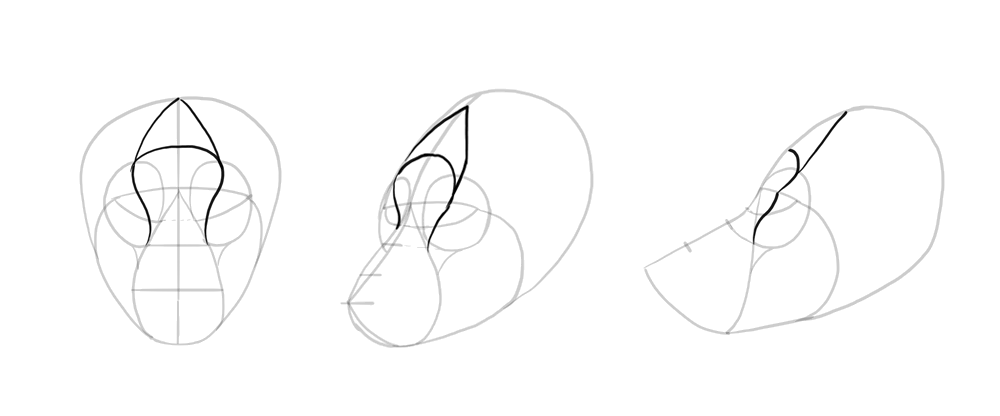
Place the eyes in the triangular areas.
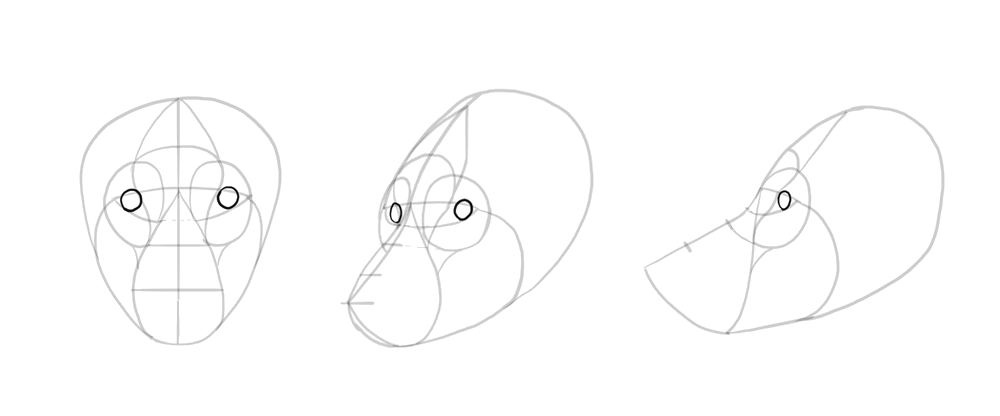
Add some features to the eyes.
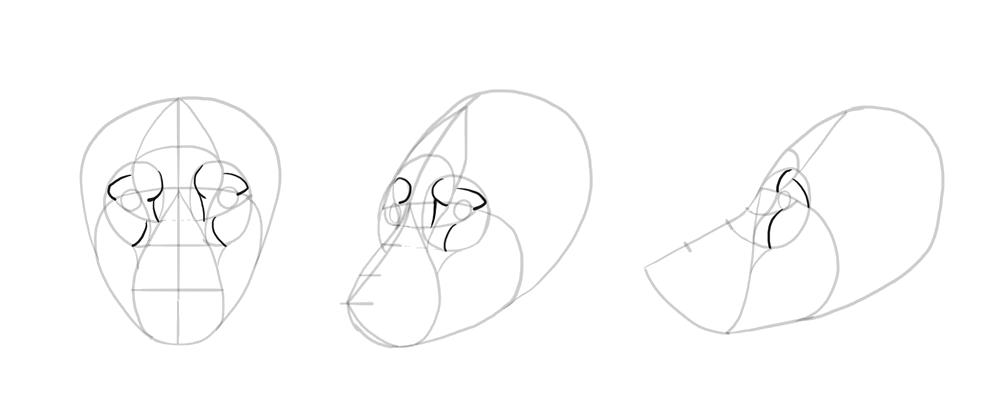
Depict the nose and the lips. The nose should exist quite large. Find how thin the mentum is!
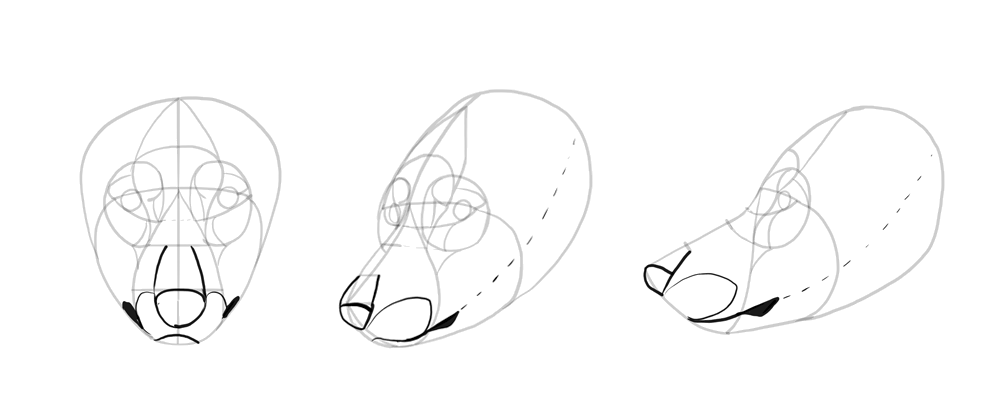
Time for the ears. Surprise hither—they're actually not pointed! Keep them long just rounded.
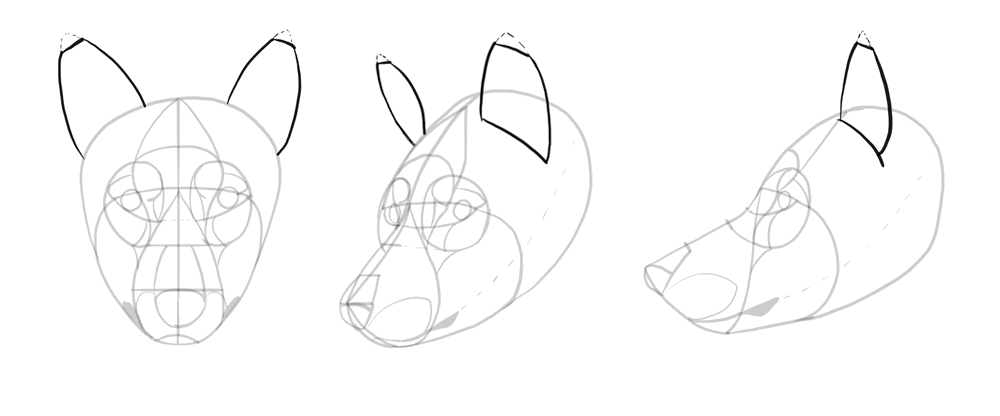
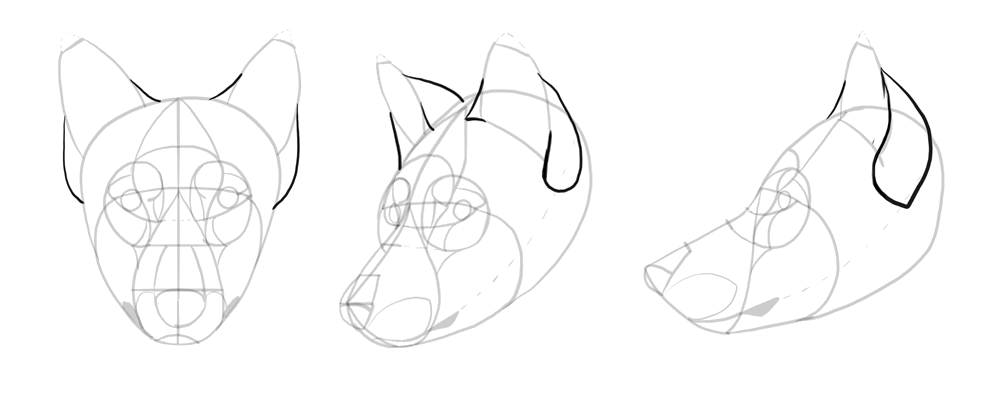
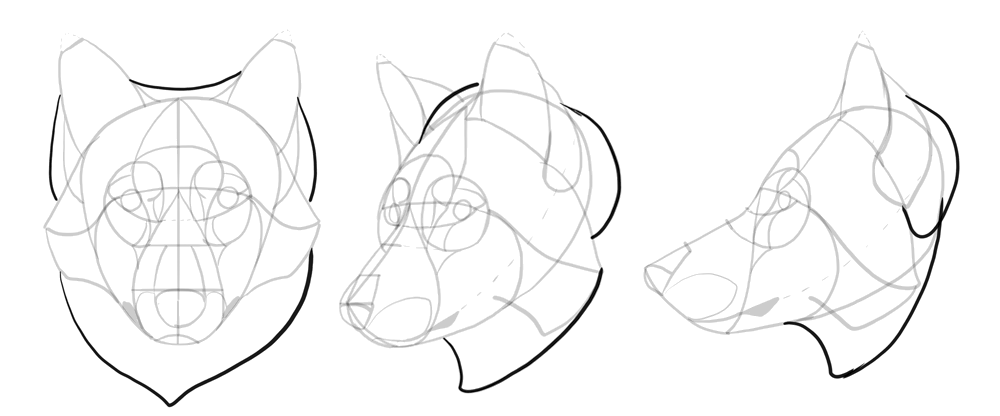
At this point, your wolf should await already like a wolf, merely in its summer coat. Let'due south give it a more classic look past adding the mane.
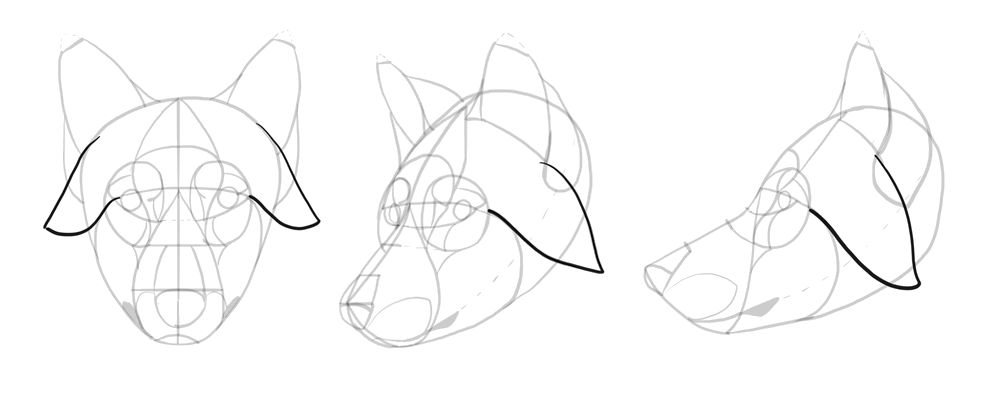
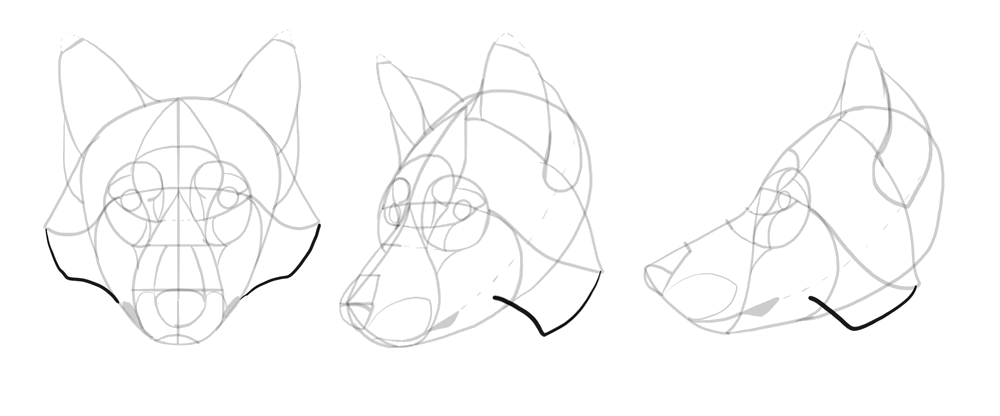
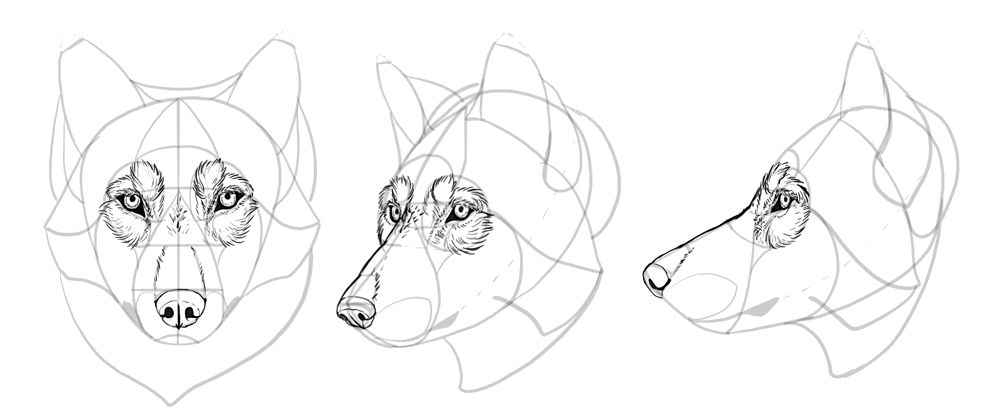
Permit's add together the details now. The optics accept a very dark outline and they're covered at the top with "eyelashes." The pupils are circular.
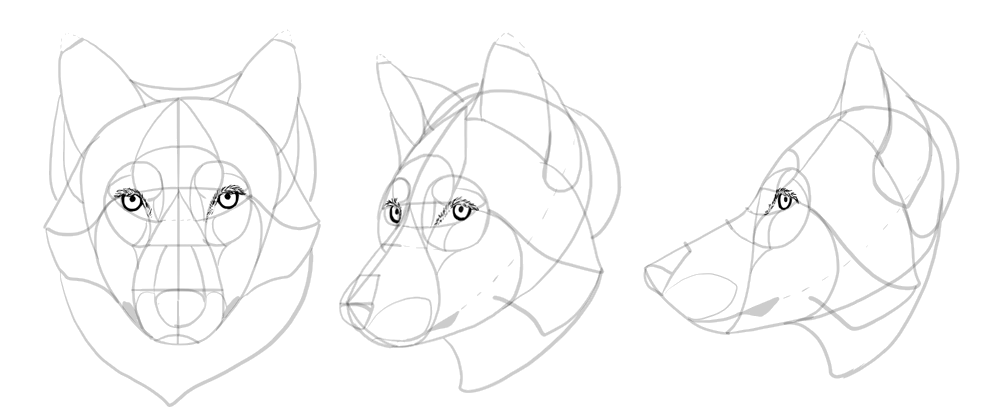
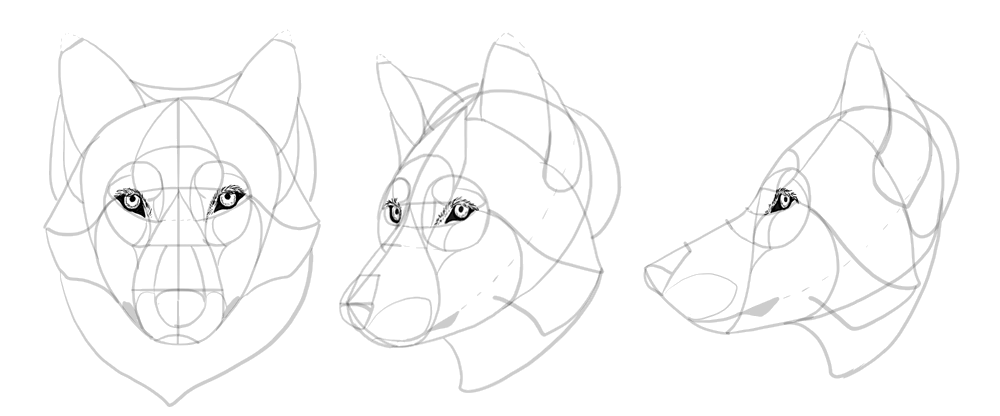
The classic "almond shape" of the eyes is achieved past adding the dark outline.
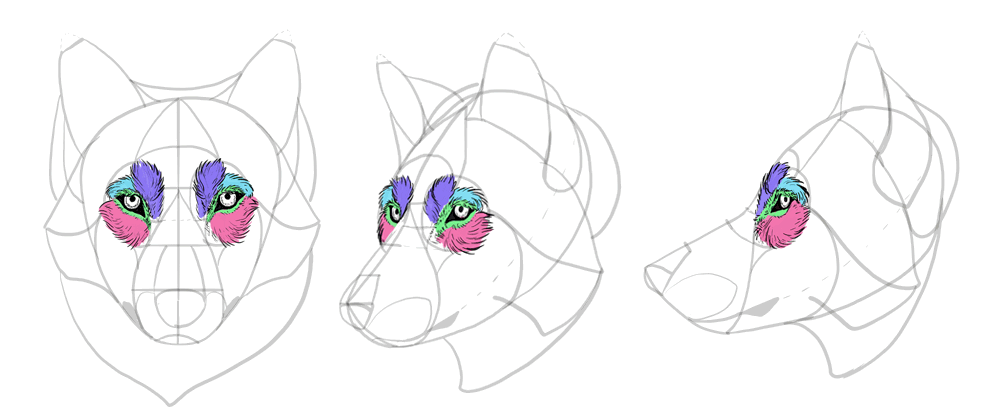
The fur around the eyes is very important, considering it creates a characteristic wolf glance. These patches are as important equally our eyebrows!
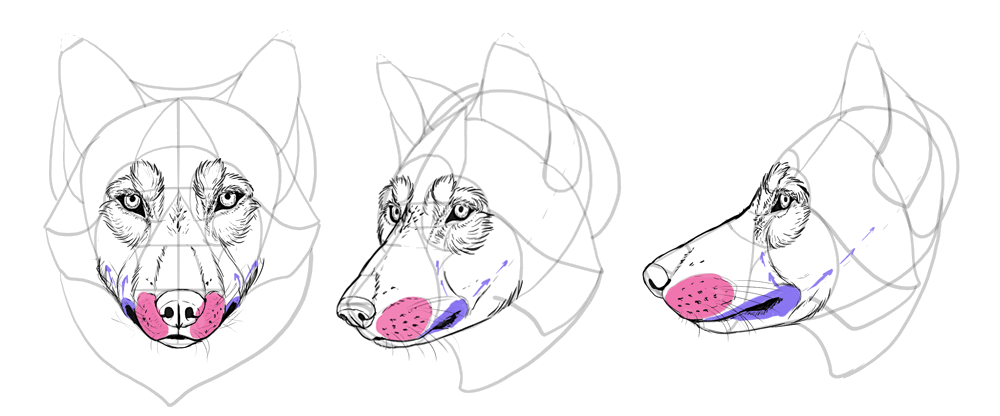
The nose is quite apartment in the forepart, with big holes and a wide dorsum.

Wolves have whiskers, too! The corner of the lips should be placed near the eye level.
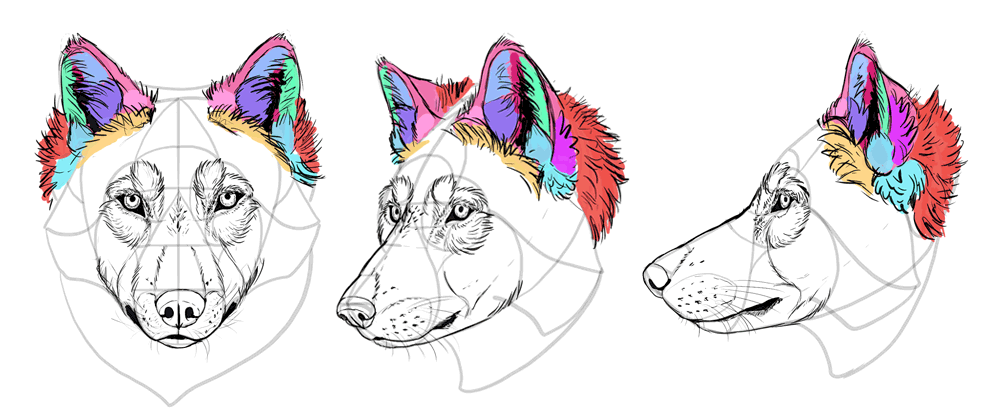
If y'all want to draw a wolf quickly, you can only add fur everywhere. But if you want to achieve a realistic look, use my guide. Continue in mind the ears are e'er very fluffy inside.
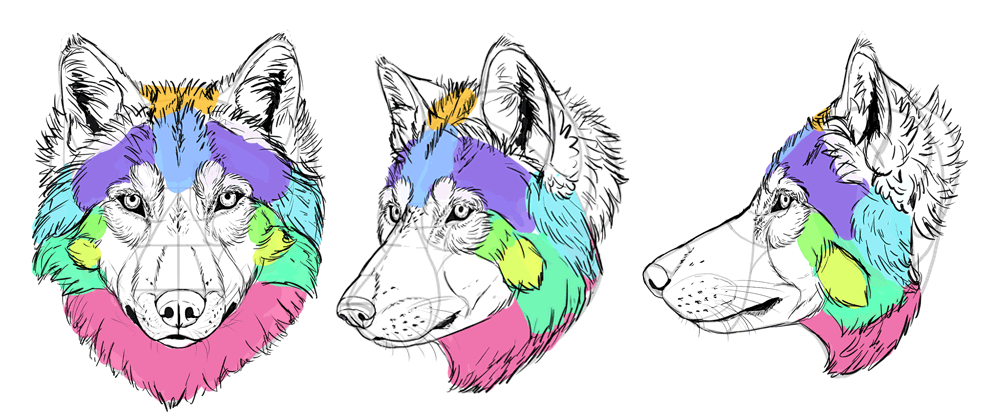
When you finish your drawing, accentuate the well-nigh important parts with darker lines—especially the area around the eyes. This will stress the typical proud look of a wolf and will allow y'all avert cartoon the curious optics of a dog instead.
Wolf Expressions
Wolves are social animals, and they take developed a variety of facial expressions to let their packmates know how they feel. We tin can use them in drawing to make our wolves more realistic.
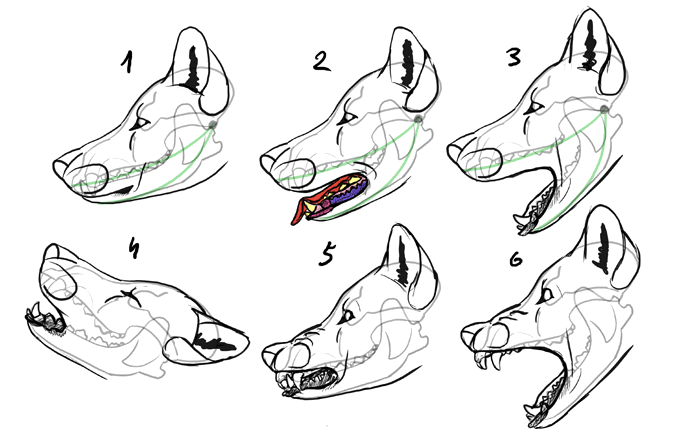
- This is a normal country. Pay attention to the jaw joint and how the mouth covers the teeth.
- This is a relaxed state. The animal may exist panting after some physical effort, it may "smile" this fashion, but sometimes information technology also means the creature is nervous. Again, take a look at the jaw joint. The lower teeth are simply partially visible because they're covered with a feature wide, bumpy lower lip (only canines have this structure).
- This is a wolf opening its mouth in a relaxed way, for example to eat something. Observe how loose skin of the mouth nevertheless covers the upper teeth.
- This is a howling wolf. Imagine information technology as a wolf "duck-face"—the lips are contracted to create a small passage for the air in the forepart.
- This wolf is aroused or just wants to look intimidating. Although the jaws are closed, it tin can evidence its teeth past pulling upwardly the lose skin of the mouth (along with the olfactory organ). The upper gums can be visible, just just in the forepart. Notice wide open eyes!
- This is the aforementioned country with the mouth open up. Compare it with no. 3.
Boosted note: "angry" state tin exist turned into "fearful" state but by putting the ears back.
How to Depict Wolf Fur
A "1-slice pajama" skin is what makes felines look cat-like. A wolf can exist created by post-obit some other rule: a special management of fur over the body. Information technology may await complicated at first, but if y'all draw it a few times, you'll see it's quite easy to remember.
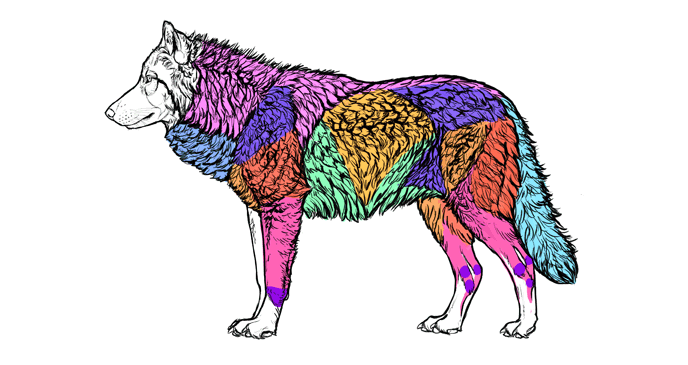
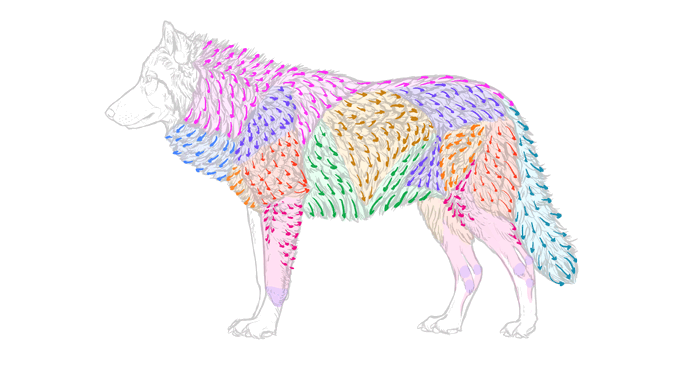
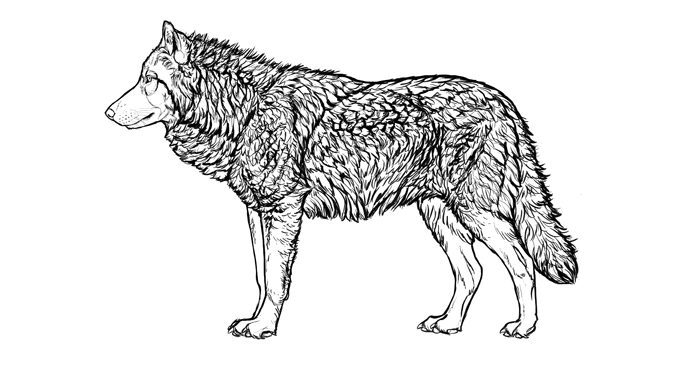
Of class, you lot don't demand to draw all the strands every time. Simply utilize the rules to create outlines of all the areas. The well-nigh important elements that should be stressed are the neck mane, the shoulder cape, the "barrel cape," and the bushy tail. The rest can exist stylized in your preferred way. In fact, if you outline the about important areas, you lot may not need to describe the rest of fur at all!
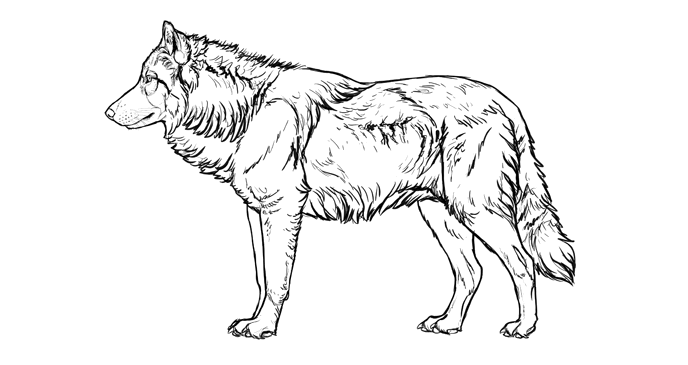
Wolves look very intimidating when they're then furry, but they're non e'er this style. Their summer coat is less impressive, making them more similar to a German shepherd. The areas of fur are still visible, but you can draw them with subtler lines.
Wolf Colors
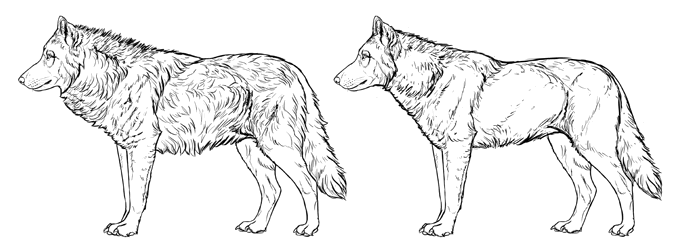
Wolves can accept a variety of colors, but they generally follow a sure dominion of coloration. The underside is bright, white or flossy, and so at that place's a medium colored area in the middle, so information technology meets a nighttime pinnacle. There's oftentimes a highly saturated surface area right below the nighttime top. The near important areas of fur are outlined in a contrasting manner. In the face the colors may accentuate the facial features we've talked about earlier. The tail oft has a darker tip, and at that place'due south a precaudal gland in the upper half, creating a patch of nighttime hair, no affair how low-cal the rest of the pelt is. The nose, paw pads, and claws are ever night. The eyes are unremarkably yellow, brown, or orange—merely pups can take nighttime blue optics.
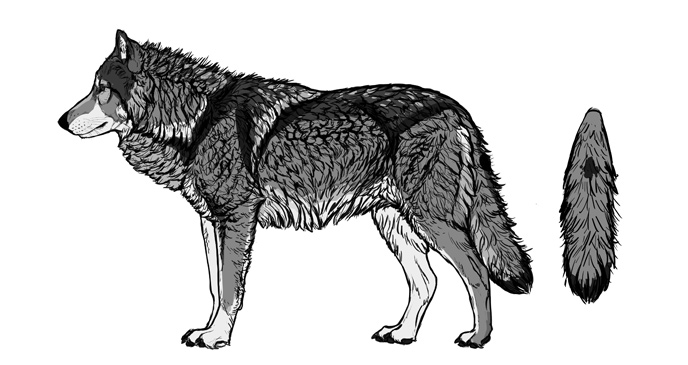
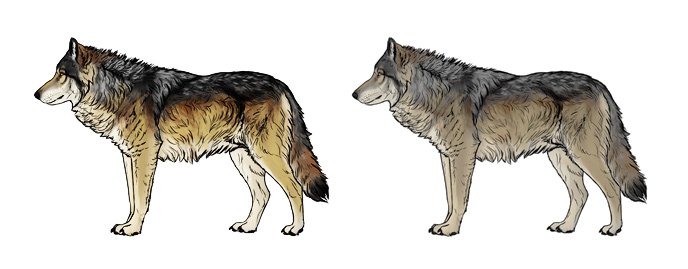
Here'due south a few popular color variations, with white existence reserved for the Chill Wolf only. You can modify certain elements to your liking (eastward.chiliad. add a nighttime tip of the tail) as long as you lot stick to the general rules described above. Keep in mind that pups are ever built-in nighttime and without any markings.
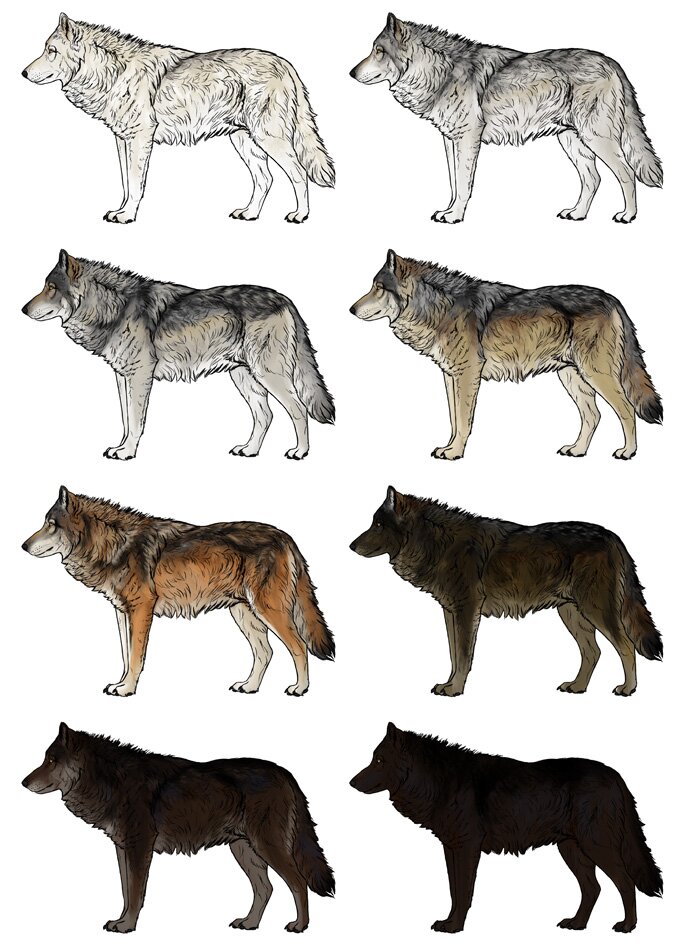
Many color variations can be created just by changing the contrast of the colors:
Mutual Mistakes
Now, don't become me wrong—you lot don't need to draw realistic wolves every time, and there are many fantastic styles y'all can utilise to draw these animals. Nevertheless, make sure your stylization is intentional and not based on ignorance. You lot tin recognize a wolf in the picture below, merely information technology's full of mistakes. Each of them can be used in your drawing, only only if you have a reason for it (for example, short cage can be proficient if yous desire your graphic symbol to await cute and friendly). Permit'southward analyze them one by one:
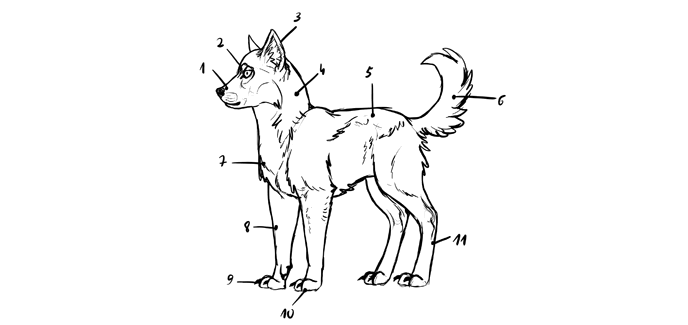
- Too short muzzle: long muzzles are important canine features
- Also big eyes: the bigger the optics, the smaller the fauna seems
- Pointed ears
- The caput is kept unnaturally high
- Too curt body
- Pointed, curled tail
- As well broad breast
- Likewise muscular legs
- Precipitous claws
- Round paws
- As well long anxiety: this is a feature of hoofed animals

Source: https://monikazagrobelna.com/2019/07/26/sketchbook-original-how-to-draw-wolves/
Posted by: smelleywhatinat.blogspot.com
0 Response to "How To Draw Wolf Legs And Arms"
Post a Comment